Blustiland: A Script Font for Creative Web Design
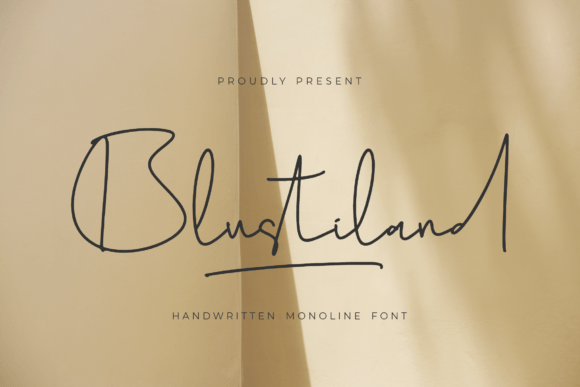
As a web designer, I’m always on the lookout for fonts that bring personality to digital projects without sacrificing usability. Blustiland, a handwritten monoline script font, has quickly become one of my go-to choices for adding warmth and character to website layouts. Its clean, flowing style makes it ideal for headers, hero sections, and other visual focal points where a personal touch can elevate the overall design.
Blustiland in Action: A Boutique Online Store
I recently tested Blustiland on a boutique online store project, where the goal was to create a soft, inviting brand identity. The font worked beautifully in the hero section, where it was used for the main headline. Its natural flow gave the page a handcrafted feel that aligned perfectly with the brand’s aesthetic. It also paired well with a simple sans serif font for the body text, creating a balanced contrast that kept the design modern yet approachable.
On mobile devices, Blustiland maintained its legibility even at smaller sizes, which is crucial for ensuring a good user experience. I noticed that when placed over image banners or dark backgrounds, the font still stood out without requiring additional styling. This made it a versatile choice for different design scenarios.
Using Blustiland in Hero Sections and CTA Buttons
One of the strongest use cases for Blustiland is in hero sections and call-to-action buttons. Its organic shape gives it a friendly, approachable vibe that works well for landing pages aiming to build trust and connection with users. I used it in a course sales page, where it was featured in the headline and CTA button. The result was a design that felt both professional and personal, which is key for converting visitors into customers.
For buttons, I found that using Blustiland at a slightly larger size helped maintain readability while still keeping the design visually engaging. It also looked great when paired with subtle background colors or gradients, making it a flexible option for different branding needs.
Blustiland for Digital Branding and Portfolio Sites
Blustiland also shines in portfolio websites and digital brand kits. I used it in a creative agency’s homepage, where it was applied to the main navigation and section headings. The font added a unique, artistic flair that set the site apart from more generic designs. It also complemented the agency’s existing color scheme and imagery, reinforcing a cohesive brand identity.
In this context, Blustiland proved to be a strong display font—perfect for short phrases and titles. However, I would advise against using it for long paragraphs or dense text blocks, as its decorative nature can reduce readability in those scenarios. For body copy, a clean sans serif or serif font would be a better choice.
Blustiland and Responsive Web Design
When working on responsive layouts, Blustiland performed consistently across different screen sizes. On desktop, it looked elegant and refined, while on mobile, it remained clear and easy to read. I also tested it on dark mode backgrounds, where it retained its charm without appearing too light or washed out.
One thing to keep in mind is that Blustiland may not be the best choice for small text elements like form labels or navigation menus. In those cases, a more traditional typeface would provide better clarity and accessibility. But for larger, more prominent text, it’s an excellent option that adds a human touch to digital experiences.
Font Pairing and Webfont Availability
Blustiland pairs well with a variety of other fonts, especially when used as a display font. I often pair it with a simple sans serif for body text, which creates a nice balance between creativity and functionality. It also works well with serif fonts for a more editorial or vintage feel, depending on the brand’s tone.
Before implementing Blustiland on a live site, I recommend checking the available file formats and webfont support. Ensuring that the font is properly licensed for commercial use is also essential, especially if it’s being used on client projects or public-facing websites.